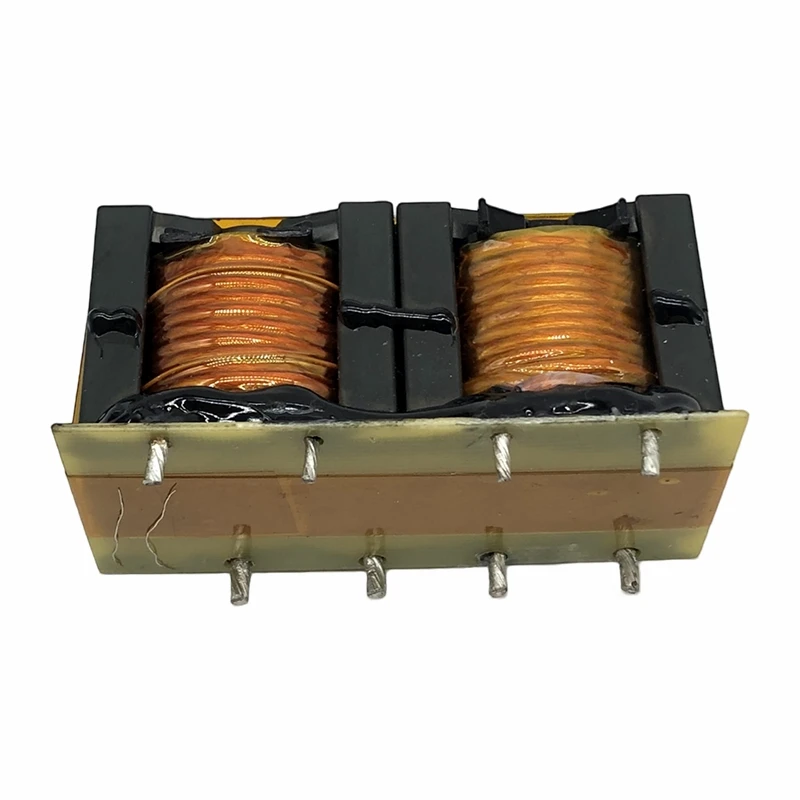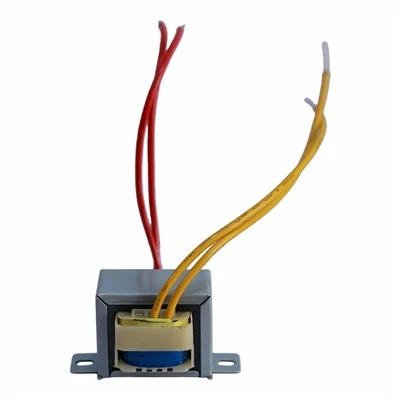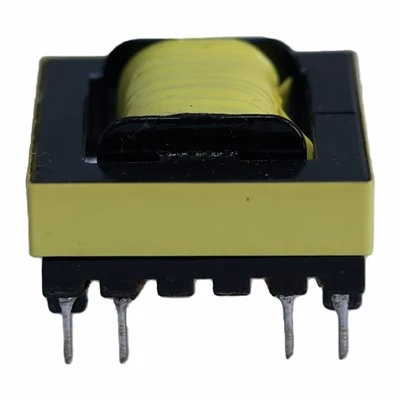

The fundamental theory of inductors is rooted in electromagnetic induction and magnetic energy storage mechanisms. At its core, a change in current generates a magnetic field around the conductor; conversely, changes in this magnetic field induce an electromotive force that opposes the change in current. This process forms the basis of inductor operation and distinguishes it from a resistor.
Theoretically, the relationship between the voltage across an inductor and the rate of change of current is expressed as $V = L \frac{di}{dt}$. The inductance value $L$ is determined by the number of coil turns, the permeability of the core material, and the physical dimensions of the component. A greater number of turns or higher permeability results in higher inductance, which in turn provides stronger resistance to changes in current. This relationship illustrates the inductor's fundamental role in a circuit: delaying changes in current.
Regarding energy dynamics, inductors can convert electrical energy into magnetic field energy for storage, governed by the formula $W = \frac{1}{2}LI^2$. Energy is stored when the current increases and released back into the circuit when the current decreases; consequently, inductors serve as energy buffers in applications such as switching power supplies, filter circuits, and oscillation systems. Furthermore, in AC circuits, inductors exhibit frequency dependence-specifically, inductive reactance ($X_L = 2\pi fL$) increases with frequency-which serves as a key theoretical basis for their widespread use in high-frequency circuits.